The University of Jaén takes two results from the SOIL O-LIVE project to Dublin
Topics Universidad de Jaén
The project on olive grove soil coordinated by the UJA presents a European protocol for producing oil and a portable system for cleaning soils at the EU Soil Mission.
JaénYa newsroom ·
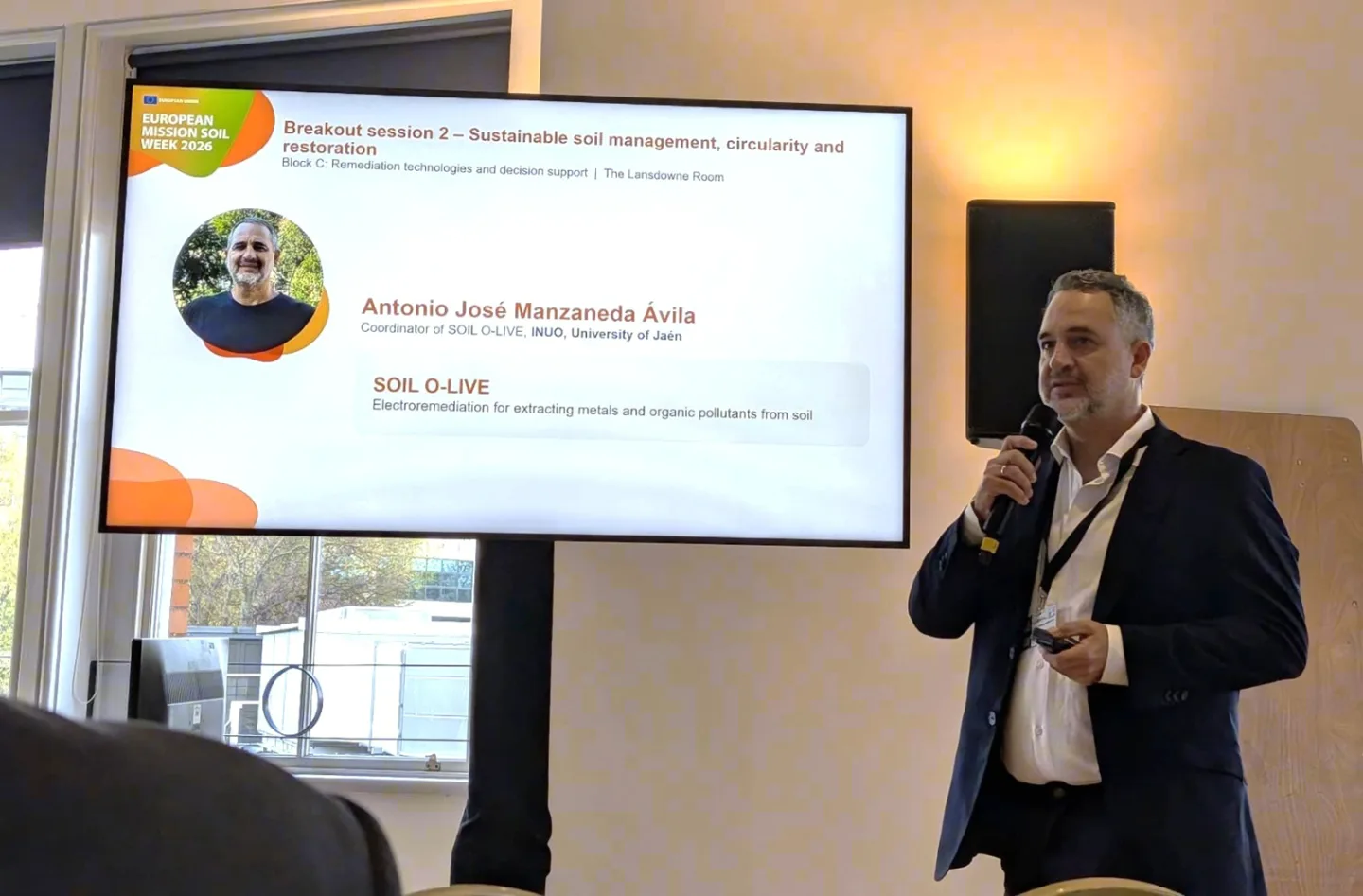
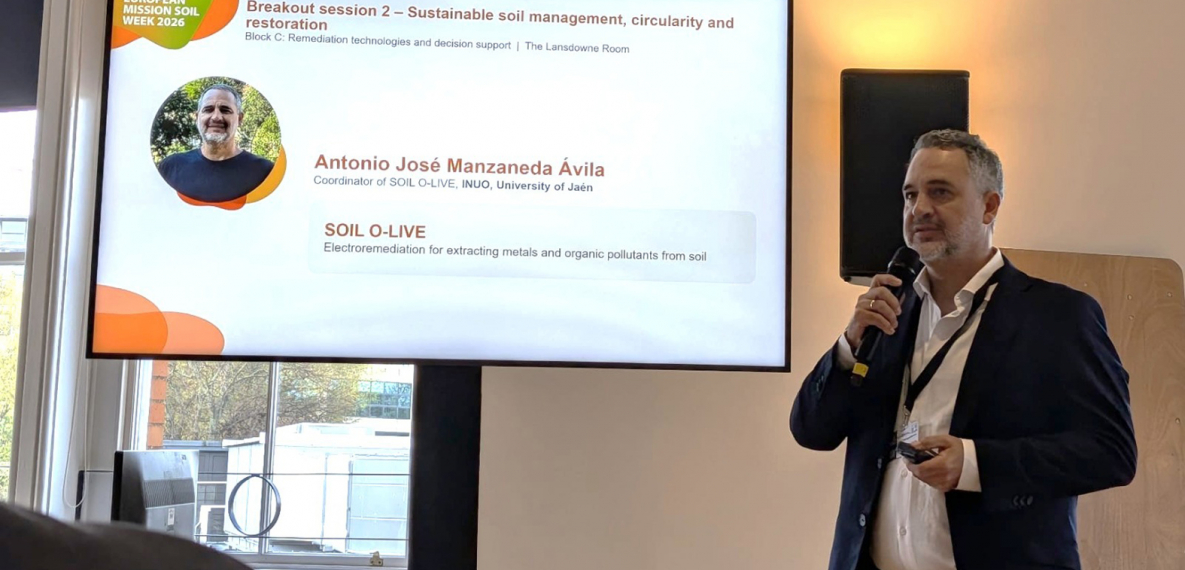
The SOIL O-LIVE project, coordinated by the University of Jaén (UJA), has presented two results with practical application before the European Commission's Soil Mission in Dublin. It did so at the fourth edition of European Mission Soil Week, the annual meeting of the EU Mission "A Soil Deal for Europe", held on November 17 and 18 with the Directorate-General for Agriculture and Rural Development of the European Commission, Teagasc and the Irish presidency of the EU Council as hosts.
The European Research Executive Agency (REA) selected the results from the Mission projects' applications. Only 32 projects presented their progress in the pitching session on Wednesday, November 18, and the one coordinated by the UJA was one of the few that did so in two different thematic blocks.
A European protocol for oil and a system for cleaning the soil
The first result is CWA 18346, a Workshop Agreement of the European Committee for Standardization (CEN) on sustainable production of extra virgin olive oil, published in February 2026. It was developed together with the Spanish Association for Standardization (UNE) and the company Deoleo, and was agreed by consensus with producers, the International Olive Council, research centres, universities and certification bodies. It brings together 235 practices in eight areas, including soil management, with requirements on erosion control, cover crops, increasing organic carbon and reducing contamination by copper and agrochemicals.
The second is a portable solar-powered electroremediation system that removes copper and pesticide residues from olive grove soil without the need to dig. It is led by a team from the University of Castilla-La Mancha, with the participation of the UJA and the Institute for Sustainable Agriculture (IAS-CSIC). After being validated in the laboratory, in 2026 it has been tested for the first time on an olive farm in the province of Jaén. The project's analyses detected copper in all 494 soil samples studied in 53 olive groves in five countries.
The coordinator of SOIL O-LIVE, Antonio J. Manzaneda, from the University Institute of Research in Olive Groves and Olive Oils (INUO) of the UJA, notes that "the olive grove is an early warning system: what is happening with its soils anticipates what can happen in much of Mediterranean agriculture".
SOIL O-LIVE studies how olive grove management influences biodiversity and soil functioning and the quality and safety of the oil. It is funded by the European Union within the Horizon Europe programme and brings together universities, research centres and companies from several European and Mediterranean countries.
Breaking news from News, on your phone
An alert only when something can't wait. Free, no account needed.
On iPhone, alerts only arrive if you first add JaénYa to your Home Screen. How to do it, step by step
This browser can't receive alerts. Try another one, such as Chrome or Safari.
You've blocked alerts from JaénYa in this browser. You can turn them back on in its settings. How to do it, step by step
Only what can't wait. Change or remove it in my alerts
Shall we let you know what matters?
Phone alerts
On iPhone, alerts only arrive if you first add JaénYa to your Home Screen. How to do it, step by step
This browser can't receive alerts. Try another one, such as Chrome or Safari.
You've blocked alerts from JaénYa in this browser. You can turn them back on in its settings. How to do it, step by step